OUR PROJECTS · HEALTHY FARMED FOOD SOLUTIONS PROJECT
What goes into every bag
Every week our volunteers harvest, pack and deliver bags of 12 to 18 pounds to more than 150 locations across the county. Each one is built around a real meal a family can cook that night.
Packing list · one weekly bag
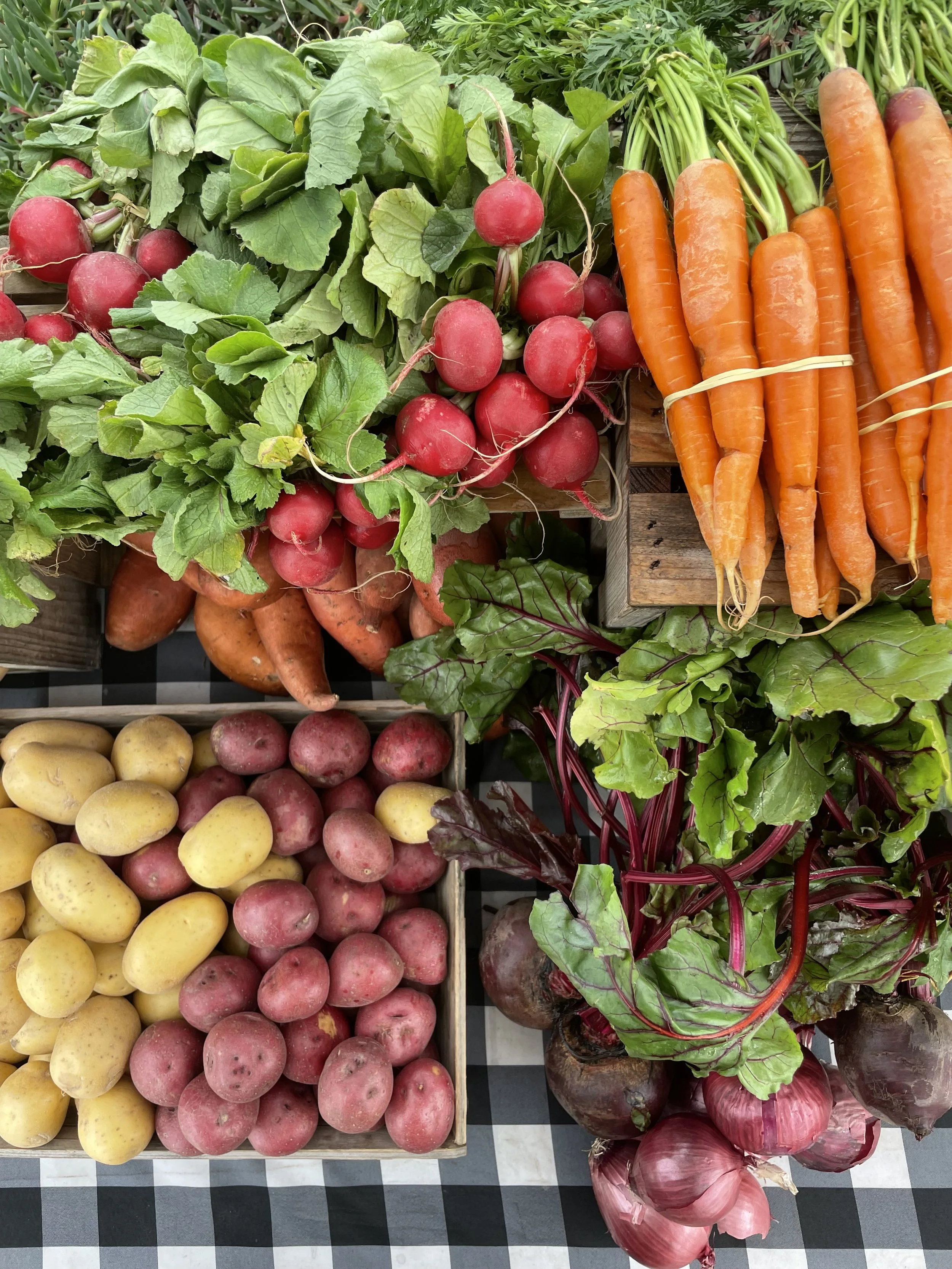
Dinner for 10: Every major ingredient and the recipe, often zucchini, potatoes and carrots
Kitchen basics: Broccoli, cauliflower, carrots, celery
Protein: 12 to 18 eggs, by family size, and beans grown on our farm
Salsa makings: Tomatoes, onion, serrano and/or jalapeño, cilantro, lemon
Salad makings: Lettuce, kale, onion, shallot, dill, basil
A letter: How we farm, why we believe food is a human right, and our promise to see you next week
Some families get more, like sourdough bread, snacks and fruit, depending on what they are facing. Our recipes are reviewed by a physician on our board who works in nutrition.
Who it reaches
People living with cancer, MS and other serious illness
Elderly neighbors
Young adults raising younger brothers and sisters after losing a parent
Families facing food insecurity
Trust comes first
We count bags, never names. The trust of the families we serve matters more to us than any data we could collect.
Gleaning
We also rescue surplus produce from other local farms so it feeds people instead of going to waste. We only glean produce that has not been sprayed with pesticides or herbicides. This year's goal is 35,000 pounds.
COMPOSTING PROJECT
Feeding the soil that feeds the county
Our Composting Project is for the whole community. It keeps waste out of the landfill and turns it into compost that feeds the soil.
Our farm sits on heavy clay. Compost is how we open that soil up, help it hold water through the dry months, and feed our crops without synthetic fertilizer. What is left after harvest goes back into the pile and returns as compost for the next planting.
It is also a hands-on lesson for every student who comes to work on the farm.
Harvest → Scraps → Compost → Healthier soil → Next harvest

FARM EDUCATION AND WHAT COMES NEXT
Teaching the next farmers, and building a farm that feeds more people
Water from the air
Water is what limits how much we can grow. With UC Santa Cruz and MIT, we are building Warka water towers that pull moisture from the air to irrigate the fields. We plan to build ten.
Students on the farm
Students from Carpinteria High School, Summerland Elementary, Cate School, San Marcos High School and SBCC learn here. This fall, five UCSB Climate Scholars are planting pollinator hedgerows along the farm's edges.
Room to grow
Deer fencing, a walk-in cooler, underground irrigation with sensors and farm roads, so we can grow more of the food we give and buy less of it.
WAYS TO HELP
Thank you for helping us see every family next week.
Give
Your gift goes to growing, packing and delivering food, and to reaching the 170 families waiting for a spot.
Volunteer
Harvest on the farm, pack bags, or help with deliveries. Volunteers are welcome every day, 7:30 a.m. to 3:30 p.m.
Need food?
If you or someone you know needs food, call us. We start with an intake interview and income and health verification. Atendemos en español.